Why energy belongs in the computing plan
The expansion of AI is putting the electricity requirements of data centres in sharper focus. The International Energy Agency’s Energy and AI report examines how computing demand interacts with the energy system. For investors and infrastructure partners, this makes the energy supply and the location of computing capacity part of the same planning question.
Our approach considers the systems around the computing load alongside the computing equipment itself. The aim is to develop the energy and computing concept together, rather than treating electricity supply as a separate issue.
One concept: generation, storage and computing
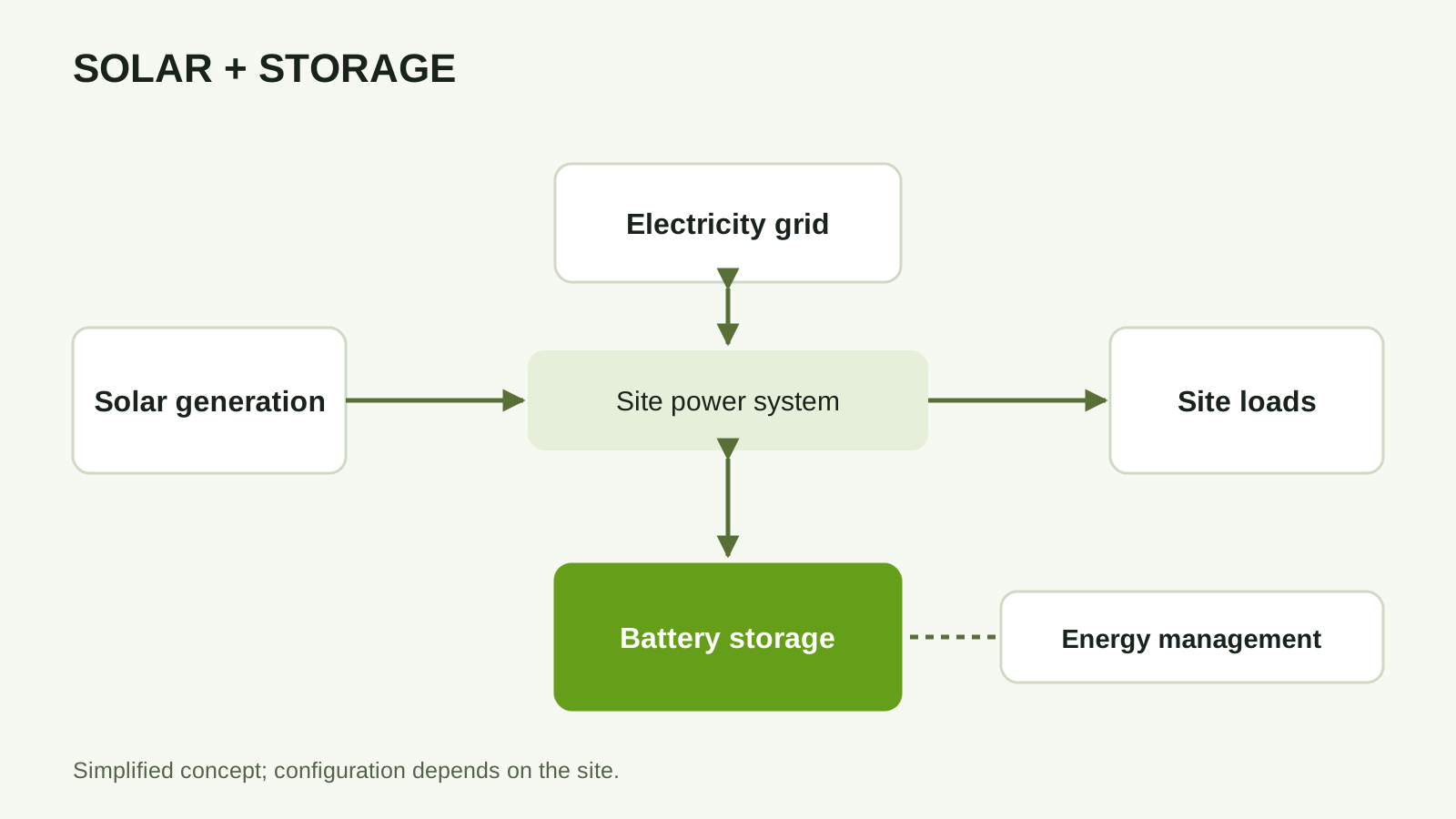
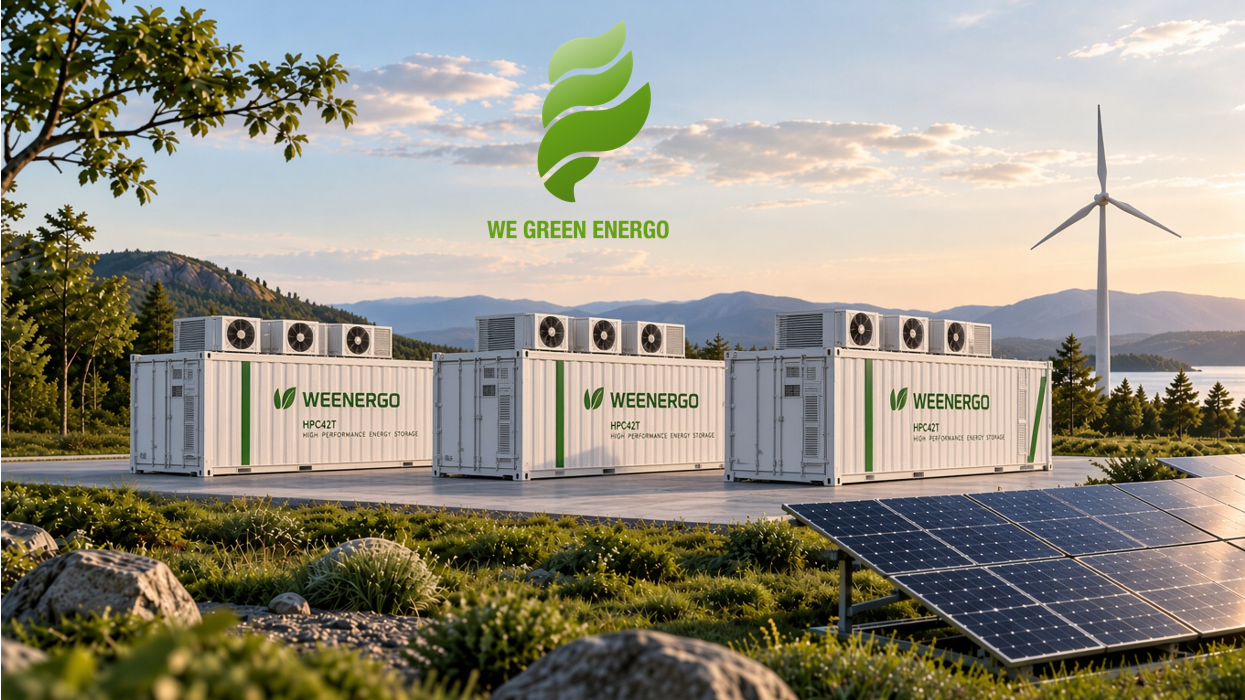
WE GREEN ENERGO’s AI Energy Concept brings solar and wind generation, grid interfaces, battery storage and containerized high-performance computing (HPC) into a single overview. The related HPC42T market-sounding material describes modular infrastructure covering power, cooling and computing equipment.
The cooling concept combines a closed-loop system with dry coolers. The project materials describe avoiding cooling-water demand as a design objective. Cooling performance and any water requirements need to be verified for the selected configuration and site; this is not a verified claim of zero water use across the whole installation.

Connecting computing demand with electricity offtake
We envisage HPC electricity demand as a substantial part of the offtake for the proposed solar and wind infrastructure. The commercial concept combines computing demand with local electricity sales through power purchase agreements (PPAs) and, as a complement, battery storage arbitrage.
This mix is intended to improve the commercial use of electricity and reduce reliance on cross-border day-ahead sales. Any tariff advantage, avoided fees and achievable revenues depend on the final site, operating model, market conditions and contracts. They are assumptions to assess, rather than secured outcomes.
Discuss the concept and its assumptions
We welcome qualified investors and infrastructure partners interested in exploring the fit between energy supply and computing demand. A first discussion can focus on the proposed configuration, the role of electricity offtake and the assumptions that need to be tested before implementation.