
Store electricity now, use it later
A battery energy storage system (BESS) absorbs electricity and releases it later. This is useful when generation and consumption occur at different times. Solar electricity generated at midday can be stored for later use, or delivery to the grid can be shifted to a commercially more favourable period. [1, 2]
Make better use of on-site solar generation
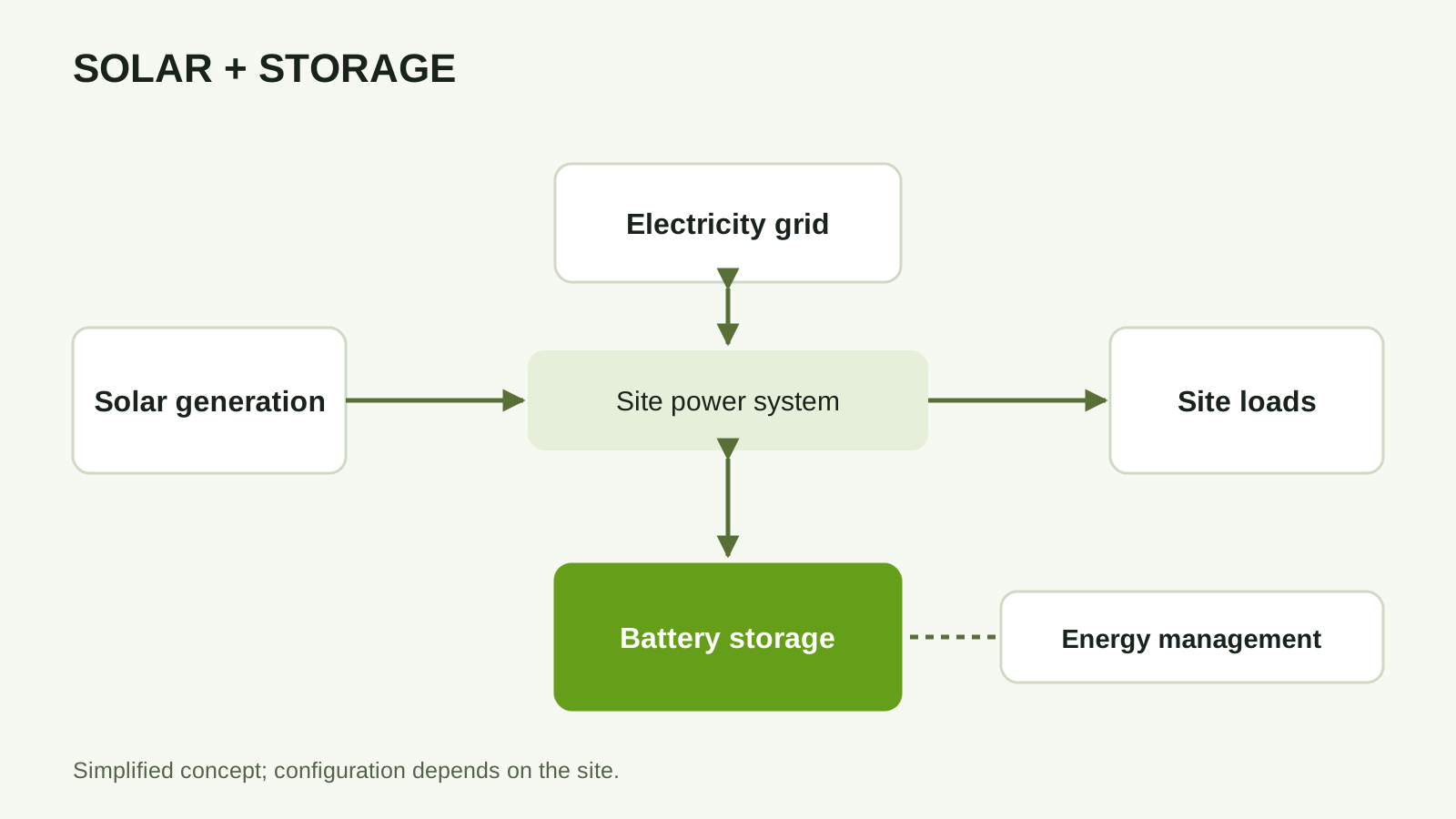
When a business’s PV installation produces more electricity than it needs, suitably sized storage can absorb part of that surplus. The stored energy can later cover demand that would otherwise be supplied from the grid.
Whether this is economical depends on the load profile, electricity purchase prices, remuneration for direct feed-in and storage losses. The value therefore needs to be assessed against actual site data. [2, 3]
Manage demand peaks within connection limits
A battery can supply part of a temporary demand peak when machinery or charging points need high power at the same time. Savings arise particularly where the applicable tariff includes demand-based charges.
The battery must have sufficient charge and power capability. Its operation can improve the use of an existing connection, but it does not remove the permitted grid connection limit. [3]
Assess trading and balancing applications
Larger installations can offer electricity trading and balancing opportunities. Price differences are commercially useful only when they exceed charging and discharging costs, including losses.
For participation in balancing services, Croatia’s transmission system operator HOPS requires successful prequalification and the relevant contracts. A specialist partner or aggregator may be involved, depending on the operating model. [4, 5]
Support renewable integration—and design backup separately
Storage can absorb temporary surplus generation and release it later. At suitable locations, this can reduce curtailment and help relieve the grid.
Backup supply for selected business loads is another possible application. It requires storage, inverters, protection equipment and switching designed for that purpose; it is not an automatic feature of every grid-connected system. [1, 2, 6]
Our approach: connect the battery to an operating plan
An energy management system (EMS) uses generation forecasts, consumption, prices and state of charge to schedule operation within technical and contractual limits. A viable plan establishes priorities and accounts for battery degradation.
The same storage power cannot be committed without restriction to self-consumption, trading and balancing services at the same time. Working with Caelus, we connect storage selection and sizing with EMS integration and the intended business model, assessing benefits against each site’s actual requirements.
Discuss the application that matters to your business
Contact WE GREEN ENERGO to discuss whether your priority is using more on-site solar power, managing demand peaks or evaluating market applications. A useful first discussion starts with the site, existing infrastructure and consumption pattern.


